
10 Early Warning Signs of Heart Attack You Should Never Ignore
Heart attacks don't always happen suddenly. Many people experience warning signs hours, days, or even weeks beforehand. Recognizing these symptoms early can save lives.
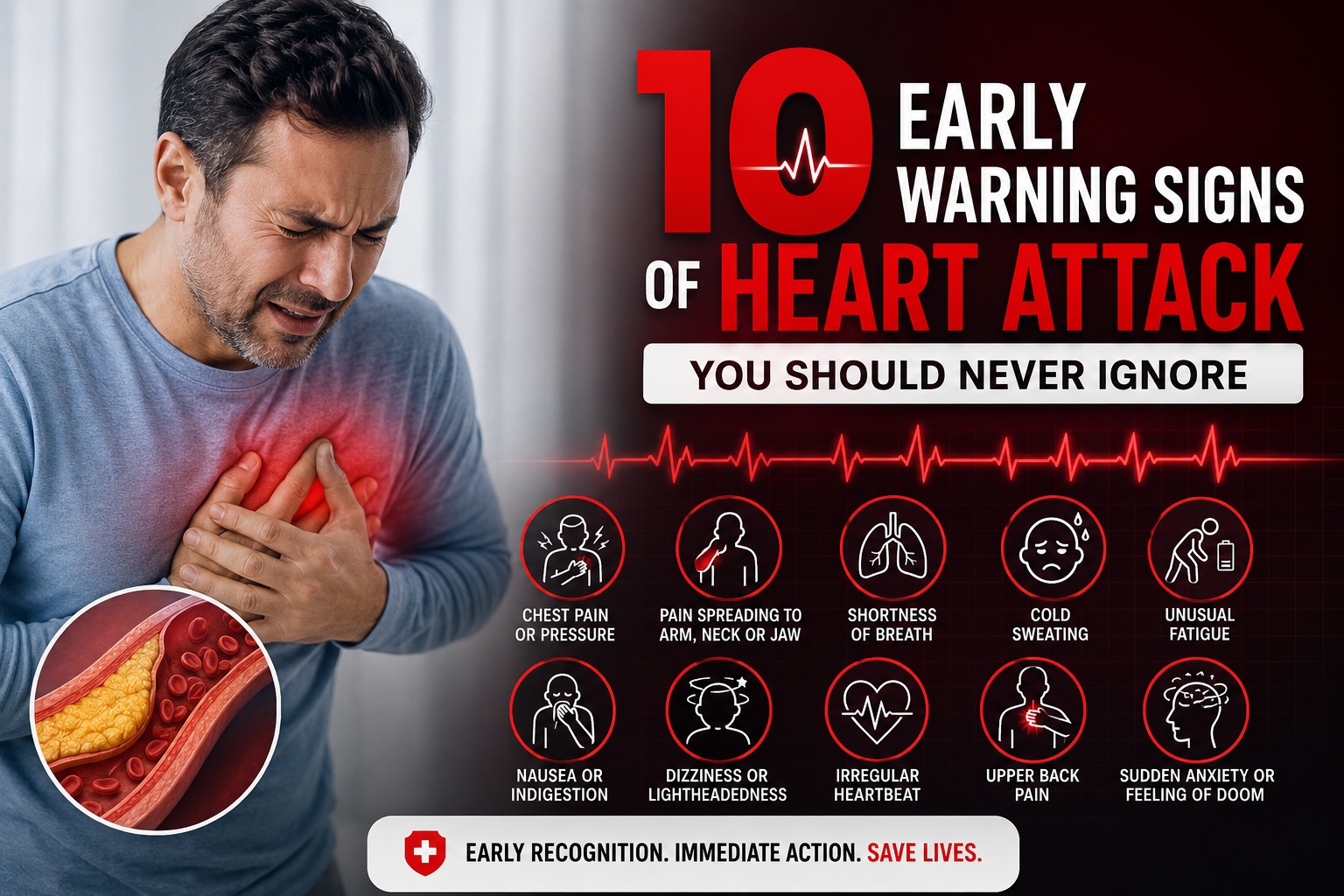
Heart disease continues to affect millions of people every year, regardless of age or gender. While chest pain is the symptom most people associate with a heart attack, the body often gives several warning signals before the condition becomes life-threatening.
Recognizing these symptoms early and acting immediately can reduce permanent damage to the heart and even save lives. In this article, we'll discuss the early warning signs of a heart attack, risk factors, available treatment options, and practical tips to protect your heart.
What is a Heart Attack?
A heart attack, medically known as Myocardial Infarction (MI), occurs when the blood supply to a part of the heart muscle becomes blocked. This blockage is usually caused by the buildup of fatty deposits and the formation of a blood clot inside a coronary artery.
Without oxygen-rich blood, heart muscle cells begin to die, making immediate medical treatment essential.
10 Early Warning Signs of a Heart Attack
Although symptoms vary from person to person, the following warning signs should never be ignored.
Chest Pain or Pressure
The most common symptom is discomfort in the center or left side of the chest. It may feel like pressure, heaviness, squeezing, or burning and can last for several minutes or come and go repeatedly.
Pain Spreading to Other Parts of the Body
Heart attack pain is not always limited to the chest. It may spread to the left arm, right arm, shoulders, neck, jaw, or upper back.
Shortness of Breath
Difficulty breathing during routine activities or while resting may indicate reduced blood flow to the heart.
Cold Sweating
Sudden cold sweating without physical activity is another important warning sign that should never be ignored.
Unusual Fatigue
Feeling extremely tired for no obvious reason, especially over several days, can sometimes be an early symptom of heart disease. This is particularly common among women.
Nausea or Indigestion
Some people experience nausea, vomiting, stomach discomfort, or heartburn-like symptoms before or during a heart attack.
Dizziness or Lightheadedness
Feeling faint, dizzy, or unusually weak may occur when the heart is unable to pump blood effectively.
Irregular Heartbeat
A racing or irregular heartbeat accompanied by chest discomfort or breathlessness requires immediate medical attention.
Pain in the Upper Back
Some patients, especially women, may experience persistent pain between the shoulder blades instead of classic chest pain.
A Sudden Feeling That Something Isn't Right
Many heart attack survivors describe an unusual feeling that "something is seriously wrong" even before severe symptoms begin.
Who Is More Likely to Have a Heart Attack?
Several factors can increase the risk of heart disease, including:
- High blood pressure
- Diabetes
- High cholesterol
- Smoking
- Obesity
- Family history of heart disease
- Lack of physical activity
- Chronic stress
- Excessive alcohol consumption
People with multiple risk factors should undergo regular health check-ups and follow medical advice to reduce their risk.
How is a Heart Attack Diagnosed?
Doctors may recommend several tests depending on the patient's condition.
Common investigations include:
- Electrocardiogram (ECG)
- Troponin Blood Test
- Echocardiography
- Coronary Angiography
- Chest X-ray
- Blood Pressure Monitoring
Early diagnosis allows doctors to begin life-saving treatment without delay.
Treatment Options
Treatment depends on the severity of the heart attack and how quickly the patient reaches the hospital.
Common treatment options include:
- Emergency medications
- Blood-thinning medicines
- Angioplasty and stent placement
- Coronary artery bypass surgery (CABG) in selected cases
- Cardiac rehabilitation and lifestyle modifications
Prompt treatment greatly improves recovery and reduces long-term complications.
How to Reduce Your Risk of Heart Disease
Maintaining a healthy lifestyle remains the best way to lower the risk of a heart attack.
Healthy Lifestyle Habits
- Exercise regularly.
- Eat a balanced diet rich in fruits and vegetables.
- Quit smoking.
- Limit alcohol intake.
- Maintain a healthy body weight.
- Manage blood pressure, diabetes, and cholesterol.
- Get regular medical check-ups.
- Reduce stress through proper sleep and relaxation techniques.
When Should You Seek Immediate Medical Help?
Visit the nearest emergency department immediately if you experience:
- Chest pain lasting more than a few minutes
- Pain spreading to the arm, neck, or jaw
- Severe shortness of breath
- Cold sweating
- Sudden dizziness
- Loss of consciousness
Never ignore these symptoms or wait for them to disappear on their own.
Frequently Asked Questions (FAQs)
Can young adults have a heart attack?
Yes. Although heart attacks are more common in older adults, younger individuals with obesity, smoking habits, diabetes, or a family history of heart disease are also at risk.
Do women experience different symptoms?
Yes. Women may experience fatigue, nausea, jaw pain, upper back pain, or shortness of breath instead of severe chest pain.
Can a heart attack occur without chest pain?
Yes. Some patients, especially women and people with diabetes, may experience a "silent" heart attack with only mild or unusual symptoms.
Can heart attacks be prevented?
Many heart attacks can be prevented by maintaining a healthy lifestyle, controlling existing medical conditions, and undergoing routine health screenings.
Conclusion
A heart attack rarely happens without warning. Recognizing the early symptoms and seeking immediate medical attention can make a life-saving difference. Whether it's persistent chest discomfort, unexplained fatigue, shortness of breath, or pain spreading to the arm or jaw, these warning signs should never be ignored.
At TAKMEDI, we believe that reliable health information empowers people to make informed decisions about their well-being. If you or someone around you experiences symptoms of a heart attack, seek emergency medical care without delay.