
Kidney Stones: Symptoms, Causes, Treatment & Prevention Tips
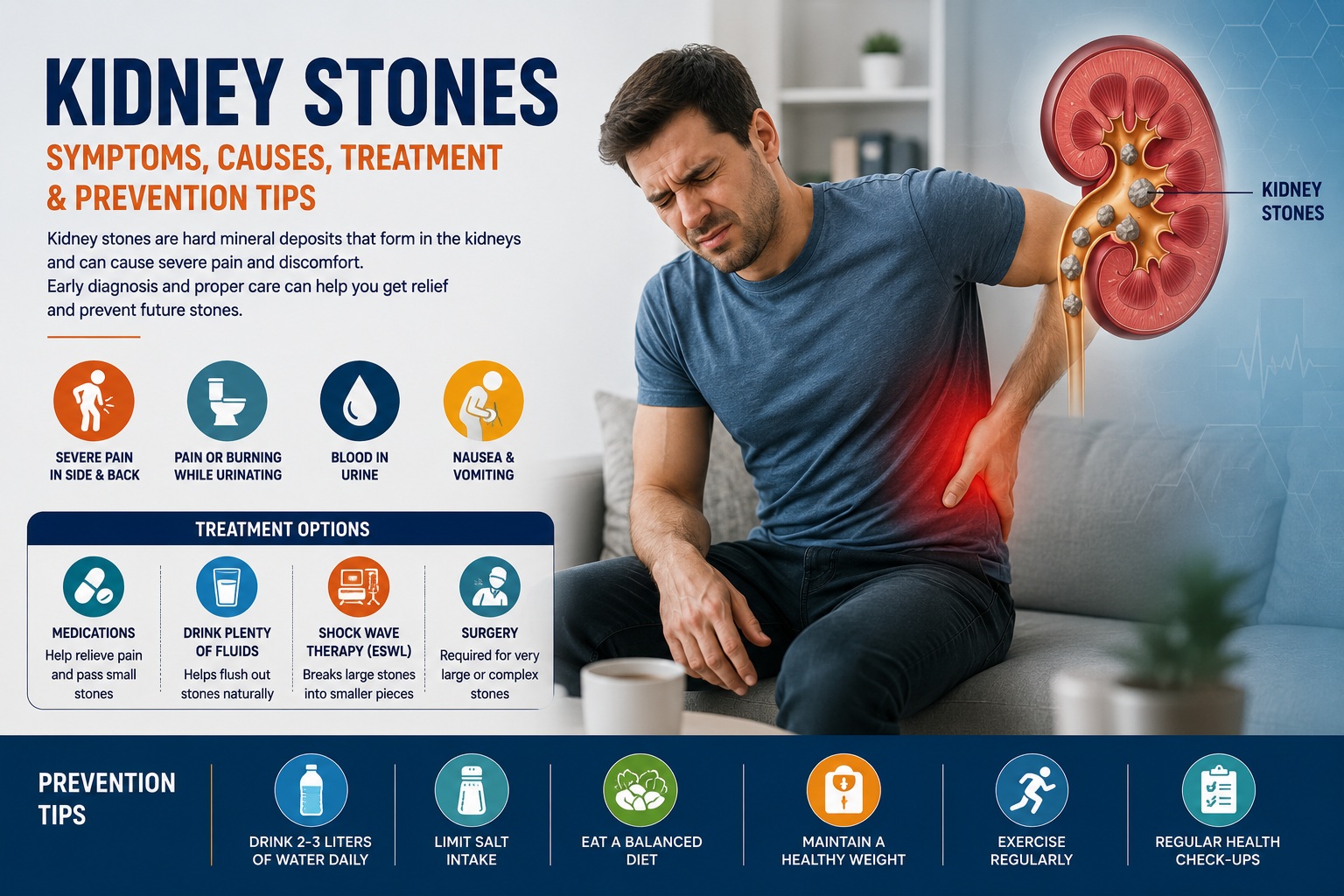
Kidney stones can cause severe pain and discomfort, but early diagnosis and proper treatment can prevent serious complications. Learn about the symptoms, causes, treatment options, and effective prevention tips to keep your kidneys healthy.
Introduction
Kidney stones are one of the most common urinary tract problems affecting millions of people worldwide. These hard mineral deposits develop inside the kidneys and may remain unnoticed until they begin moving through the urinary tract.
While small kidney stones may pass naturally, larger stones can cause intense pain, difficulty urinating, blood in urine, and even kidney infections if left untreated.
The good news is that with early diagnosis, proper treatment, and healthy lifestyle habits, kidney stones can often be treated successfully and prevented from returning.
What Are Kidney Stones?
Kidney stones are hard deposits made of minerals and salts that form inside the kidneys when urine becomes concentrated.
Normally, urine contains substances that prevent crystal formation. However, when these substances become imbalanced, crystals start joining together and gradually form stones.
Kidney stones can range from the size of a grain of sand to as large as a golf ball.
Common Symptoms of Kidney Stones
Symptoms usually appear when the stone starts moving through the urinary tract.
Common signs include:
- Severe pain in the lower back or side
- Pain that spreads towards the lower abdomen or groin
- Burning sensation while urinating
- Blood in urine
- Frequent urge to urinate
- Cloudy or foul-smelling urine
- Nausea and vomiting
- Fever and chills (if infection develops)
Pain caused by kidney stones often comes in waves and can become extremely intense.
What Causes Kidney Stones?
Several factors increase the risk of kidney stone formation.
1. Not Drinking Enough Water
Dehydration is one of the leading causes of kidney stones.
2. High Salt Intake
Excess sodium increases calcium levels in urine, increasing stone formation.
3. High-Protein Diet
Eating excessive amounts of red meat may increase uric acid levels.
4. Obesity
Being overweight significantly increases the risk.
5. Family History
Genetics also play an important role.
6. Certain Medical Conditions
Conditions such as:
- Gout
- Hyperparathyroidism
- Recurrent urinary tract infections
- Digestive disorders
may increase the likelihood of developing kidney stones.
Types of Kidney Stones
Different types require different treatment approaches.
Calcium Stones
The most common type, usually formed from calcium oxalate.
Uric Acid Stones
Often seen in people who consume a high-protein diet or suffer from gout.
Struvite Stones
Usually develop after repeated urinary tract infections.
Cystine Stones
A rare type caused by an inherited genetic disorder.
Who Is at Higher Risk?
You may have a higher chance of developing kidney stones if you:
- Drink very little water
- Eat excessive salty foods
- Consume high amounts of animal protein
- Are overweight
- Have diabetes
- Have a family history of kidney stones
- Have previously suffered from kidney stones
How Are Kidney Stones Diagnosed?
Doctors may recommend several tests to confirm the diagnosis.
These include:
- Urine Test
- Blood Test
- Ultrasound
- CT Scan
- X-ray (in selected cases)
These investigations help determine the size, location, and type of stone, allowing doctors to recommend the most appropriate treatment.
Treatment Options
Treatment depends mainly on the size and location of the stone.
Small Stones
Doctors usually recommend:
- Drinking plenty of water
- Pain-relieving medicines
- Medications that help pass the stone naturally
Large Stones
If the stone is too large, medical procedures may be required.
These include:
- Shock Wave Lithotripsy (ESWL)
- Ureteroscopy
- Percutaneous Nephrolithotomy (PCNL)
- Surgery (rarely needed)
How Can You Prevent Kidney Stones?
Simple lifestyle changes can greatly reduce your risk.
✔ Drink 2–3 litres of water daily
✔ Reduce salt intake
✔ Maintain a healthy body weight
✔ Eat more fruits and vegetables
✔ Limit sugary soft drinks
✔ Avoid excessive animal protein
✔ Stay physically active
Good hydration is the single most effective way to prevent kidney stones.
When Should You See a Doctor?
Seek immediate medical attention if you experience:
- Severe pain that doesn't improve
- Blood in urine
- Fever with chills
- Difficulty passing urine
- Persistent vomiting
- Pain in both kidneys
Early treatment helps prevent kidney damage and infections.
Frequently Asked Questions (FAQs)
Can kidney stones go away without surgery?
Yes. Many small stones pass naturally with increased water intake and prescribed medications.
Are kidney stones dangerous?
Most kidney stones are treatable, but delaying treatment can lead to infections or kidney damage.
Can kidney stones come back?
Yes. People who have had kidney stones once are more likely to develop them again if preventive measures are not followed.
Which doctor treats kidney stones?
A Urologist is the specialist who diagnoses and treats kidney stones.
Conclusion
Kidney stones are painful but highly manageable when detected early. Paying attention to your hydration, maintaining a healthy diet, and seeking timely medical care can significantly reduce both the risk of developing stones and the chances of recurrence.
Ignoring persistent symptoms such as severe back pain, blood in urine, or difficulty urinating may lead to serious complications. Taking small preventive steps today can protect your kidney health for years to come.