
Thyroid Disorders: Symptoms, Causes, Diagnosis & Treatment
Thyroid disorders can affect your energy levels, weight, mood, heart rate, and overall health. Learn about the symptoms, causes, diagnosis, treatment options, and lifestyle tips to manage thyroid problems effectively.
Introduction
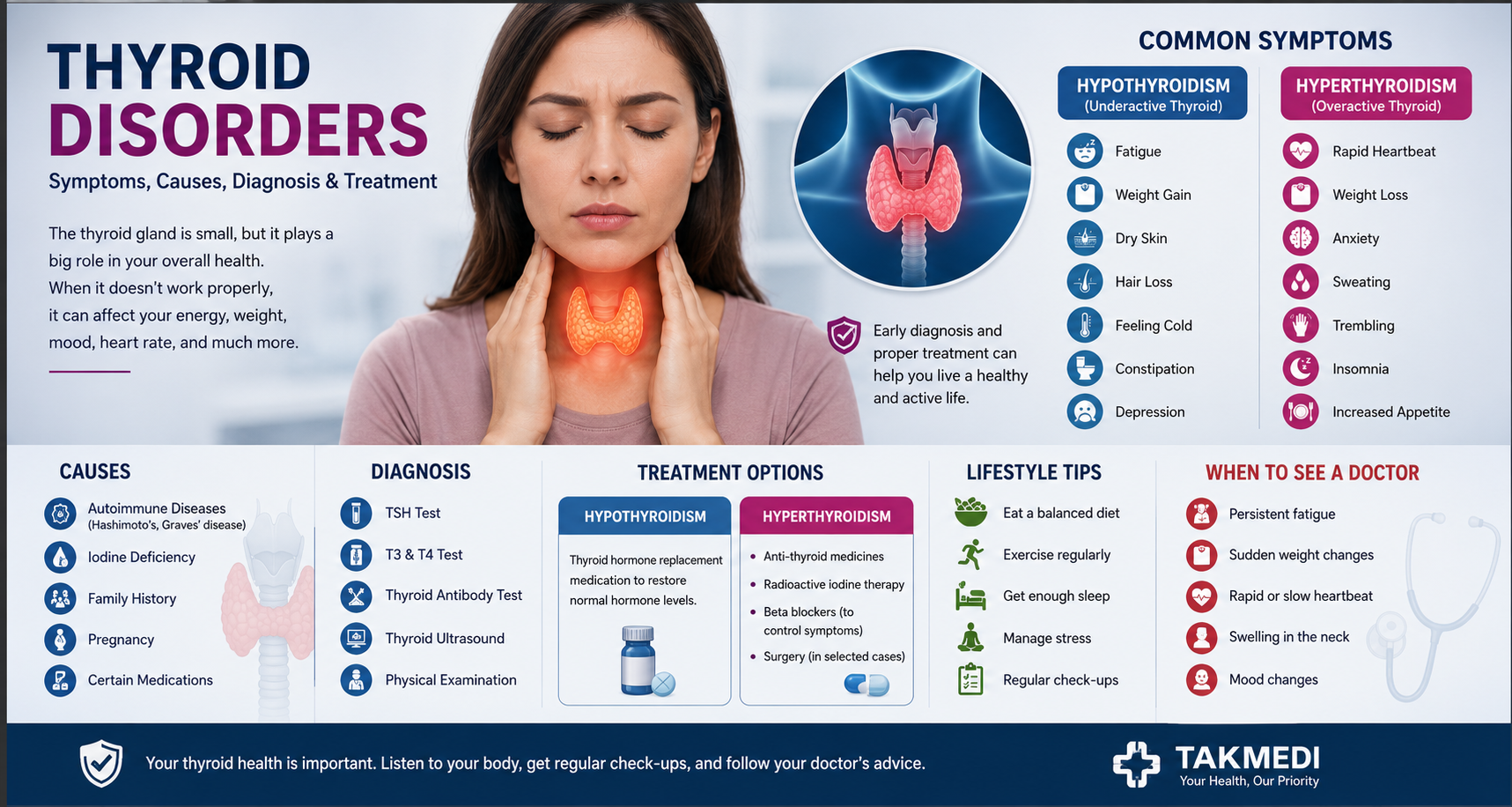
The thyroid gland may be small, but it plays a major role in keeping your body healthy. Located at the front of your neck, this butterfly-shaped gland produces hormones that regulate your metabolism, heart rate, body temperature, energy levels, and weight.
When the thyroid doesn't function properly, it can affect almost every organ in your body. Some people experience unexplained weight gain, constant tiredness, mood changes, or rapid heartbeat, while others may not notice symptoms until the condition becomes more serious.
The good news is that most thyroid disorders can be effectively managed with early diagnosis, proper treatment, and regular medical follow-up.
What Are Thyroid Disorders?
A thyroid disorder occurs when the thyroid gland produces too much or too little thyroid hormone.
The two most common thyroid conditions are:
1. Hypothyroidism (Underactive Thyroid)
The thyroid gland doesn't produce enough hormones, causing body functions to slow down.
2. Hyperthyroidism (Overactive Thyroid)
The thyroid produces excessive hormones, making body functions work faster than normal.
Common Symptoms of Thyroid Disorders
Symptoms depend on the type of thyroid disorder.
Symptoms of Hypothyroidism
- Constant fatigue
- Unexplained weight gain
- Dry skin
- Hair loss
- Feeling cold easily
- Depression or low mood
- Constipation
- Slow heart rate
Symptoms of Hyperthyroidism
- Rapid heartbeat
- Sudden weight loss
- Anxiety or nervousness
- Excessive sweating
- Trembling hands
- Difficulty sleeping
- Increased appetite
- Frequent bowel movements
Many thyroid symptoms develop gradually, making regular health check-ups important for early detection.
What Causes Thyroid Disorders?
Several factors can affect thyroid function.
1. Autoimmune Diseases
Conditions like Hashimoto's thyroiditis and Graves' disease are among the leading causes.
2. Iodine Deficiency
Your thyroid needs iodine to produce hormones.
3. Family History
People with a family history of thyroid disease have a higher risk.
4. Pregnancy
Hormonal changes during and after pregnancy may trigger thyroid problems.
5. Certain Medications
Some medicines can interfere with normal thyroid function.
Who Is at Higher Risk?
You may be at greater risk if you:
- Are over 35 years of age
- Have a family history of thyroid disease
- Are pregnant or recently delivered a baby
- Have another autoimmune disorder
- Are female (women are affected more often than men)
How Are Thyroid Disorders Diagnosed?
Doctors usually recommend:
- TSH (Thyroid Stimulating Hormone) Test
- T3 Test
- T4 Test
- Thyroid Antibody Test
- Thyroid Ultrasound (when needed)
These tests help determine whether the thyroid is underactive or overactive.
Treatment Options
Treatment depends on the specific thyroid condition.
For Hypothyroidism
Doctors usually prescribe thyroid hormone replacement medication, which helps restore normal hormone levels.
For Hyperthyroidism
Treatment may include:
- Anti-thyroid medicines
- Radioactive iodine therapy
- Beta blockers (to control symptoms)
- Surgery (in selected cases)
Regular follow-up is essential to monitor hormone levels and adjust treatment if needed.
Healthy Lifestyle Tips
Although lifestyle changes cannot cure thyroid disease, they can support overall health.
✔ Eat a balanced diet
✔ Take medicines exactly as prescribed
✔ Get regular exercise
✔ Sleep at least 7–8 hours
✔ Manage stress through yoga or meditation
✔ Attend regular thyroid check-ups
Never stop thyroid medication without consulting your doctor.
When Should You See a Doctor?
Consult a healthcare professional if you experience:
- Persistent fatigue
- Sudden weight changes
- Rapid or unusually slow heartbeat
- Swelling in the neck
- Hair loss
- Mood changes without a clear reason
Early diagnosis can prevent long-term complications.
Frequently Asked Questions (FAQs)
Can thyroid disorders be cured?
Some thyroid disorders are temporary, while many require lifelong management with medication and regular monitoring.
Can thyroid problems affect weight?
Yes. An underactive thyroid often causes weight gain, while an overactive thyroid may result in weight loss.
Is thyroid disease hereditary?
Yes. A family history increases your risk of developing thyroid disorders.
Which doctor treats thyroid disorders?
An Endocrinologist specializes in diagnosing and treating thyroid disorders.
Conclusion
Thyroid disorders are common, but they are also highly manageable with timely diagnosis and proper treatment. Ignoring symptoms such as persistent fatigue, unexplained weight changes, or abnormal heartbeat can delay treatment and affect your overall health.
By staying informed, following your doctor's advice, taking medications regularly, and maintaining a healthy lifestyle, you can successfully manage thyroid disorders and continue living a healthy, active life. Regular check-ups remain the key to keeping your thyroid—and your overall well-being—in balance.